Glossary

What is Point of Sale?

Point of Sale is the physical or digital location where a retail transaction is completed, including the hardware, software. And processes that record the sale, accept payment. And generate a receipt. Point of Sale systems integrate payment processing, inventory tracking. And customer data to streamline operations for merchants and improve the checkout experience for buyers.

Sources reviewed: Payment Card Industry Security Standards Council, U.S. Small Business Administration

Quick Facts About Point of Sale

Category

Payment processing technology

Used for

Completing retail transactions

Common confusion

Often mistaken for payment gateways alone

Also called

POS, POS System

Often discussed with

Credit Card Payment Processing, Point of Sale System

Key Takeaways About Point of Sale

Understanding Point of Sale
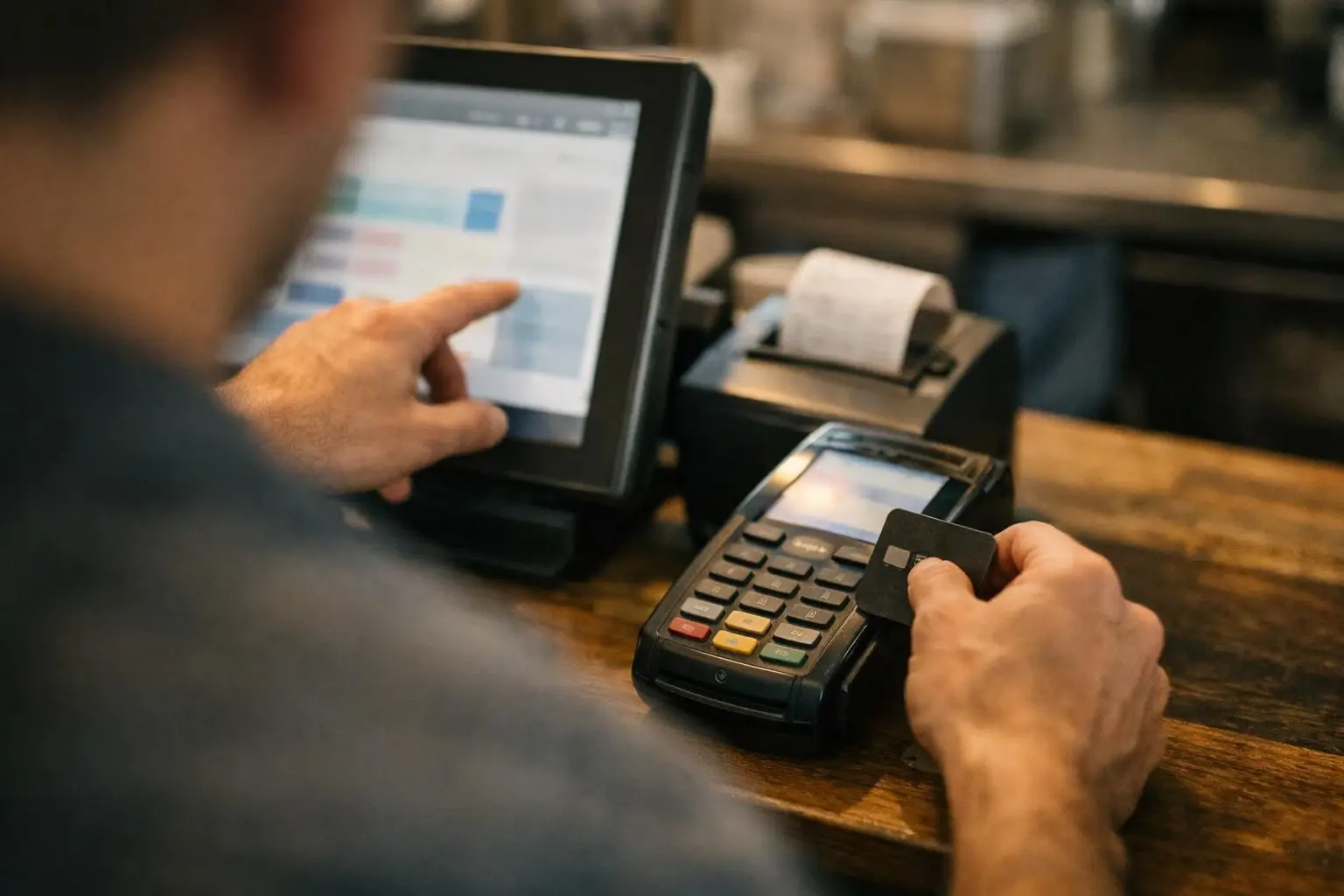
Point of Sale in Credit Card Processing: Point of Sale is the physical or digital location where a retail—visual guide

Point of Sale (POS) is where a merchant finalizes a sale. This happens when a customer pays for goods or services. It also includes the tools that help complete this exchange.

Related glossary terms: Payment Processor, EMV Chip, Near Field Communication.

Traditional POS systems used cash registers and card readers. These were physical setups at store checkout counters. Now, technology has expanded POS options. Mobile systems, online checkouts. And self-service kiosks all do the same job. They record sales and process payments.

A POS system has hardware and software parts. Hardware includes terminals, scanners, printers. And card readers. Software manages transactions, inventory. And customer data. It’s crucial because it works with payment processors. This ensures secure transactions, totals, discounts. And receipts.

A good POS system cuts errors and speeds up checkout. It also gives merchants useful data. This helps with sales trends and inventory decisions.

How Point of Sale Works?

When a customer buys something, the merchant scans or enters items. The POS system calculates the total, including taxes and discounts. The customer picks a payment method—card, mobile wallet. Or cash. Then, the system starts the payment process.

For card payments, the system checks the card details. It talks to the payment processor to approve the sale. Once approved, it finishes the sale and updates inventory. It also prints or sends a receipt.

Modern POS systems have extra features. These include loyalty programs, CRM. And reporting tools. Cloud-based systems let merchants check sales from any device. Mobile POS systems use tablets or phones as terminals. They work anywhere—pop-up shops, trade shows. Or curbside pickup. No matter the setup, the main job stays the same. It completes transactions securely and quickly.

Why Point of Sale Matters?
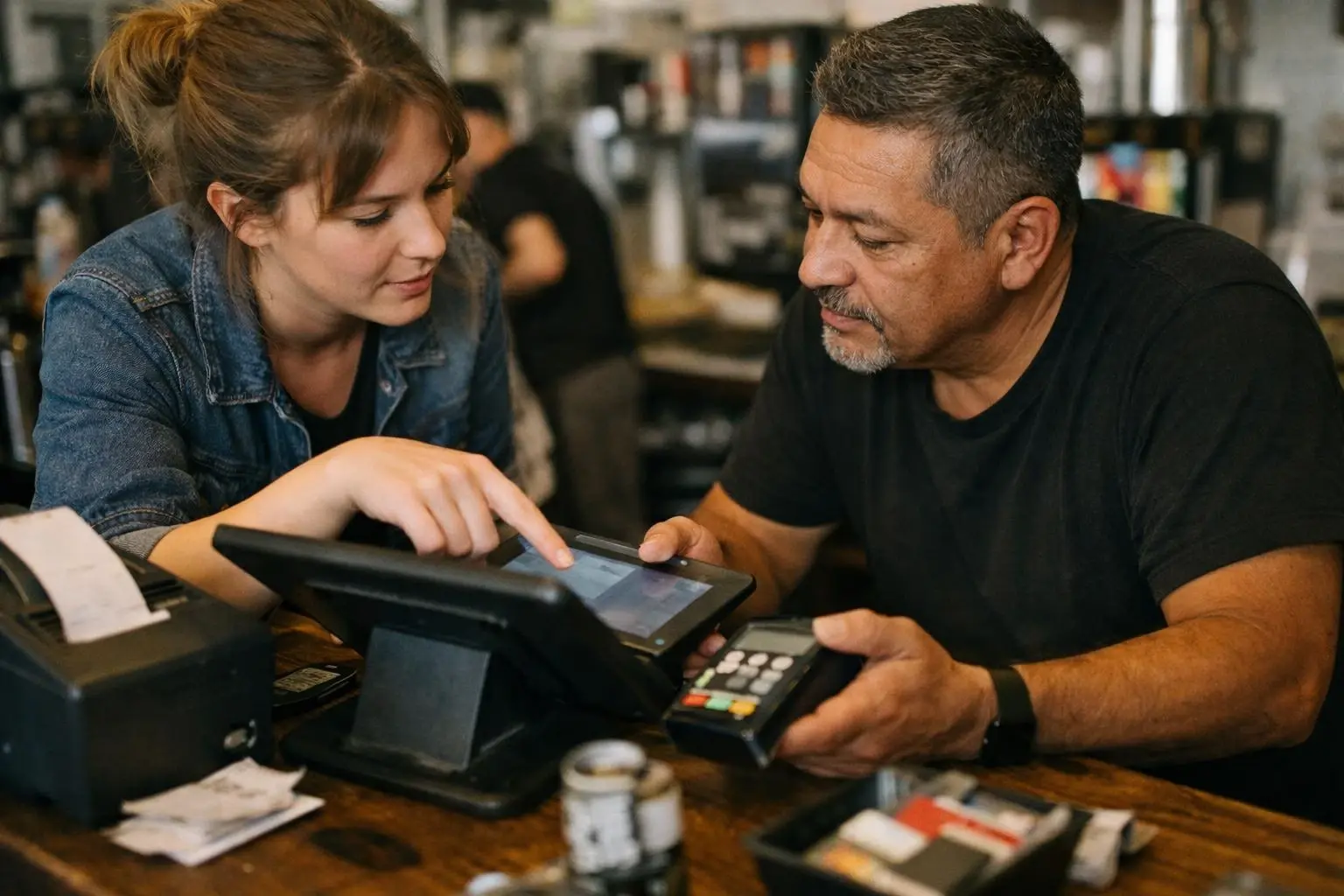
How Point of Sale applies to Credit Card Processing services in Austin, United States—practical illustration

A reliable POS system is key for daily operations. It processes transactions accurately and securely. This cuts errors and fraud risks. It also improves the customer experience. Shorter wait times and more payment options help a lot.

For inventory-based businesses, POS systems track stock in real time. This helps avoid overstocking or running out of items. They also provide data to guide business choices. This includes best-selling products, staffing needs. And marketing tweaks.

A smooth POS experience builds customer trust. Features like contactless payments and digital receipts speed up checkout. Loyalty programs make it more personal. Today’s shoppers expect omnichannel options. They want to buy online and pick up in-store. A strong POS system connects physical and digital sales. It keeps everything consistent.

When Point of Sale Matters Most?

POS systems matter most in busy retail settings. Grocery stores, restaurants. And big retailers need speed and efficiency. They’re also vital for shops with complex inventory. Boutiques and specialty stores rely on tracking individual items.

For merchants adding e-commerce, a POS system helps a lot. It syncs online and in-store inventory. This ensures smooth order fulfillment across all channels.

Security is critical, especially with payment data. PCI DSS compliance is a must. POS systems use encryption and tokenization to protect customer info. Merchants in Austin, TX, must follow local sales tax rules. POS systems can automate this for accuracy. Whether a business has one store or many, the right POS system grows with them.

How to Evaluate Point of Sale?

Related Concepts Compared

Point of Sale vs. Payment Gateway

A payment gateway is a service that securely transmits transaction data between a merchant and a payment processor. While a Point of Sale system includes both hardware and software to complete the entire sales process.

Point of Sale vs. Merchant Account

A merchant account is a type of bank account that allows businesses to accept card payments, whereas a Point of Sale system is the technology used to process those payments at the time of sale.

Expert Note

While many merchants focus on the transactional aspects of a POS system, the real value lies in its ability to integrate with other business tools. A POS system that syncs with inventory, accounting. And marketing platforms can save time and reduce manual errors, making it a central hub for business operations rather than just a checkout tool.

Common Mistakes or Myths About Point of Sale

  • Assuming all POS systems are the same; features vary widely between providers.
  • Overlooking PCI compliance, which can lead to fines or data breaches.
  • Ignoring integration capabilities, resulting in manual data entry across systems.
  • Choosing a POS system based solely on price without considering scalability.

Point of Sale in Practice: A Real-World Example

A local Austin coffee shop uses a cloud-based POS system to manage its morning rush. Customers order at the counter, where baristas scan items into the system. The POS calculates the total, processes the payment via a contactless card reader. And sends a digital receipt to the customer’s email. At the end of the day, the shop owner reviews sales reports to identify top-selling items and adjust inventory orders accordingly.

Related Services

Related Terms

Payment Processor

Payment Processor is a financial technology company or service that handles electronic payment transactions between merchants, customers. And banks. Payment Processors authorize, transmit. And settle credit card, debit card. And other digital payments, ensuring funds move securely from the buyer’s account to the seller’s account without direct involvement from either party.

EMV Chip

EMV Chip is a small microprocessor embedded in payment cards that generates a unique transaction code for each purchase, replacing the static magnetic stripe. EMV Chips comply with global standards set by EMVCo to reduce counterfeit fraud, authenticate cardholders.

Near Field Communication

Near Field Communication is a short-range wireless technology that enables secure, contactless data exchange between devices over distances of approximately 4 centimeters or less. Near Field Communication operates at 13.56 MHz and supports three modes: reader/writer, peer-to-peer. And card emulation, making it ideal for mobile payments, access control. And device pairing without requiring manual setup or pairing codes.

Tokenization

Tokenization is a data security process that replaces sensitive cardholder information, such as a primary account number (PAN), with a unique, non-sensitive identifier called a token. This token retains no exploitable value if intercepted, reducing the risk of data breaches while enabling secure payment transactions across systems, networks. And storage environments.

PCI Compliance

PCI Compliance is a set of security standards established by the Payment Card Industry Security Standards Council (PCI SSC) to protect cardholder data during credit and debit card transactions. PCI Compliance requires businesses that handle payment card information to implement specific security measures, undergo regular assessments.

CreditCardProcessing-Austin.com

Have Questions About Point of Sale?

Contact CreditCardProcessing-Austin.com for practical guidance on Point of Sale and related credit card processing work in Austin.

Contact Us