Understanding Tokenization

Tokenization is a security technique designed to protect sensitive payment information by substituting it with a randomized, non-sensitive placeholder known as a token. The original data—such as a 16-digit credit card number—is stored securely in a centralized token vault. While the token itself is used in its place during transactions, authorization requests. And storage. Because the token has no mathematical relationship to the original data, it can't be reverse-engineered or exploited if intercepted by attackers.
Related glossary terms: Encryption, Payment Card Industry Data Security Standard, Payment Processor.
This process is particularly valuable in payment ecosystems where cardholder data must be transmitted across multiple systems, such as e-commerce platforms, mobile wallets. And recurring billing services. By removing sensitive data from merchant environments, tokenization helps businesses reduce their exposure to data breaches and lowers the complexity of compliance with standards like the Payment Card Industry Data Security Standard (PCI DSS). Unlike encryption, which uses keys to scramble data that can be decrypted later, tokenization replaces the data entirely, making it inherently more secure for long-term storage.
How Tokenization Works?
The tokenization process begins when a customer submits their payment information—such as during an online checkout or in-store purchase. Instead of storing or transmitting the actual card number, the payment processor or gateway generates a unique token that represents that specific card within that merchant’s environment. This token is then used throughout the transaction lifecycle, including authorization, settlement. And refunds, without ever exposing the real card data to the merchant’s systems.
The token vault, maintained by a secure third-party provider or payment processor, acts as the sole source of truth for mapping tokens back to their original card numbers. When a transaction requires real card data, such as when submitting a batch for settlement, the token is sent to the vault, which returns the actual card number only to authorized payment networks. That way that sensitive data never resides in the merchant’s database, point-of-sale system. Or log files, significantly reducing the risk of theft or misuse.
- Customer enters card details at checkout.
- Payment system sends data to tokenization service.
- Service generates a unique token and stores the real card data in a secure vault.
- Token is returned to the merchant and used in all next transactions.
- For settlement, the token is exchanged for the real card number only within secure payment networks.
Why Tokenization Matters?
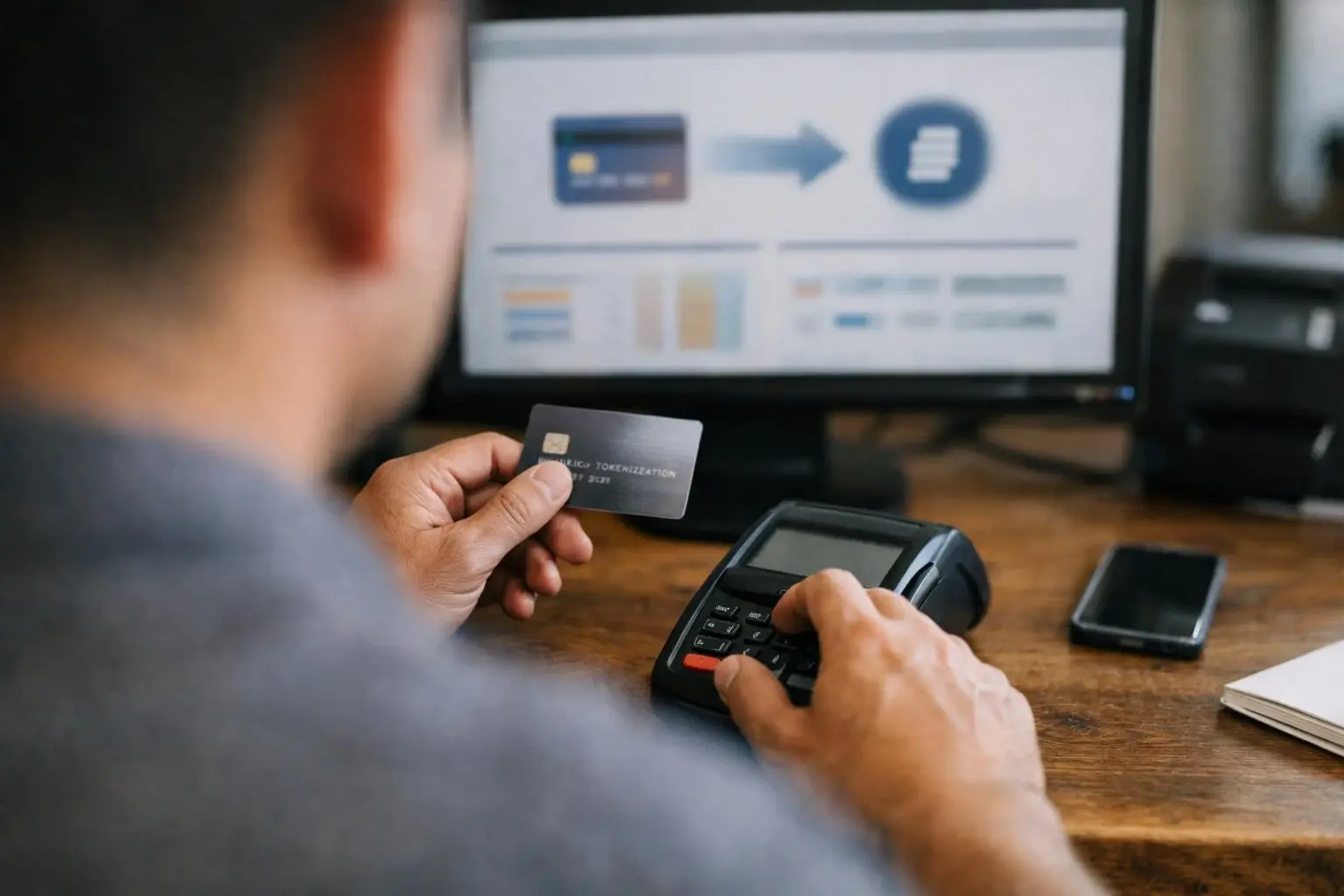
Tokenization plays a critical role in modern payment security by addressing two major challenges: data breach risk and compliance complexity. When merchants store or transmit actual credit card numbers, they become prime targets for cyberattacks and must put in place costly security controls to protect that data. A single breach can result in financial penalties, reputational damage. And loss of customer trust. By replacing sensitive data with tokens, merchants eliminate the risk of exposing real card numbers, even if their systems are compromised.
And tokenization simplifies compliance with PCI DSS requirements. Because tokens are not considered cardholder data, systems that store or process only tokens typically fall outside the scope of PCI audits. This reduces the burden on merchants, particularly small and mid-sized businesses, who may lack the resources to put in place full encryption or advanced security infrastructure. For payment processors and service providers, tokenization enables secure recurring billing, subscription management. And customer profiles without the need to store sensitive data locally.
When Tokenization Matters Most?
Tokenization is especially important in scenarios where payment data must be stored, reused. Or transmitted across multiple systems. Recurring billing models - such as subscription services, memberships. Or installment payments, rely on tokenization to securely charge customers without requiring them to re-enter their card details each time. Similarly, e-commerce platforms use tokenization to support one-click checkout and saved payment methods, improving customer convenience while maintaining security.
Tokenization also becomes critical in environments where card data is shared across partners, such as marketplaces, booking platforms. Or multi-merchant systems. Instead of passing actual card numbers between entities, tokens ensure that sensitive data remains isolated and controlled. In Austin, TX, where businesses ranging from local boutiques to tech startups handle online and in-person payments, tokenization helps merchants of all sizes reduce risk, simplify operations. And meet regulatory expectations without investing in complex security infrastructure.