Understanding PCI Compliance

PCI Compliance means following the Payment Card Industry Data Security Standard (PCI DSS). Major card brands like Visa and Mastercard created this global security framework. It was designed to cut credit card fraud. Businesses that handle card data must keep a secure environment.
PCI DSS isn't a government rule. Instead, it's enforced through contracts between merchants and payment networks. Any business that processes card payments must comply. This includes small shops and large online stores alike.
There are 12 main requirements in PCI DSS. They fall under six broader goals. These include building secure networks and protecting cardholder data. Other goals cover managing vulnerabilities and strong access controls. Businesses must also monitor networks and maintain a security policy.
Requirements include technical steps like encryption and firewalls. They also cover operational practices. These include employee training and incident response planning. All businesses must follow them, no matter their size. Failing to comply can lead to big fines or losing card processing rights.
How PCI Compliance Works?
PCI Compliance is measured by a tiered system. It's based on how many transactions a business processes each year. Merchants fall into four levels. Level 1 has the strictest rules.
Level 1 merchants process over 6 million transactions yearly. They need an annual audit by a Qualified Security Assessor (QSA). They also require quarterly scans by an Approved Scanning Vendor (ASV).
Levels 2, 3. And 4 usually complete self-assessment questionnaires (SAQs). These are tailored to the business’s payment methods. Methods include in-person, online. Or mail orders. The process starts by identifying where card data is handled.
Businesses must then add required security controls. These include encrypting data and restricting access. They must also update antivirus software regularly. After setting these up, they complete the SAQ or audit. They submit documents to their bank or processor. Any issues found must be fixed. Compliance isn’t a one-time task. Businesses must keep monitoring and adapting to new threats.
- Level 1: Over 6 million transactions/year; requires QSA audit and ASV scans.
- Level 2: 1–6 million transactions/year; requires SAQ and ASV scans.
- Level 3: 20,000–1 million e-commerce transactions/year; requires SAQ and ASV scans.
- Level 4: Fewer than 20,000 e-commerce transactions or up to 1 million total transactions/year; requires SAQ.
Why PCI Compliance Matters?
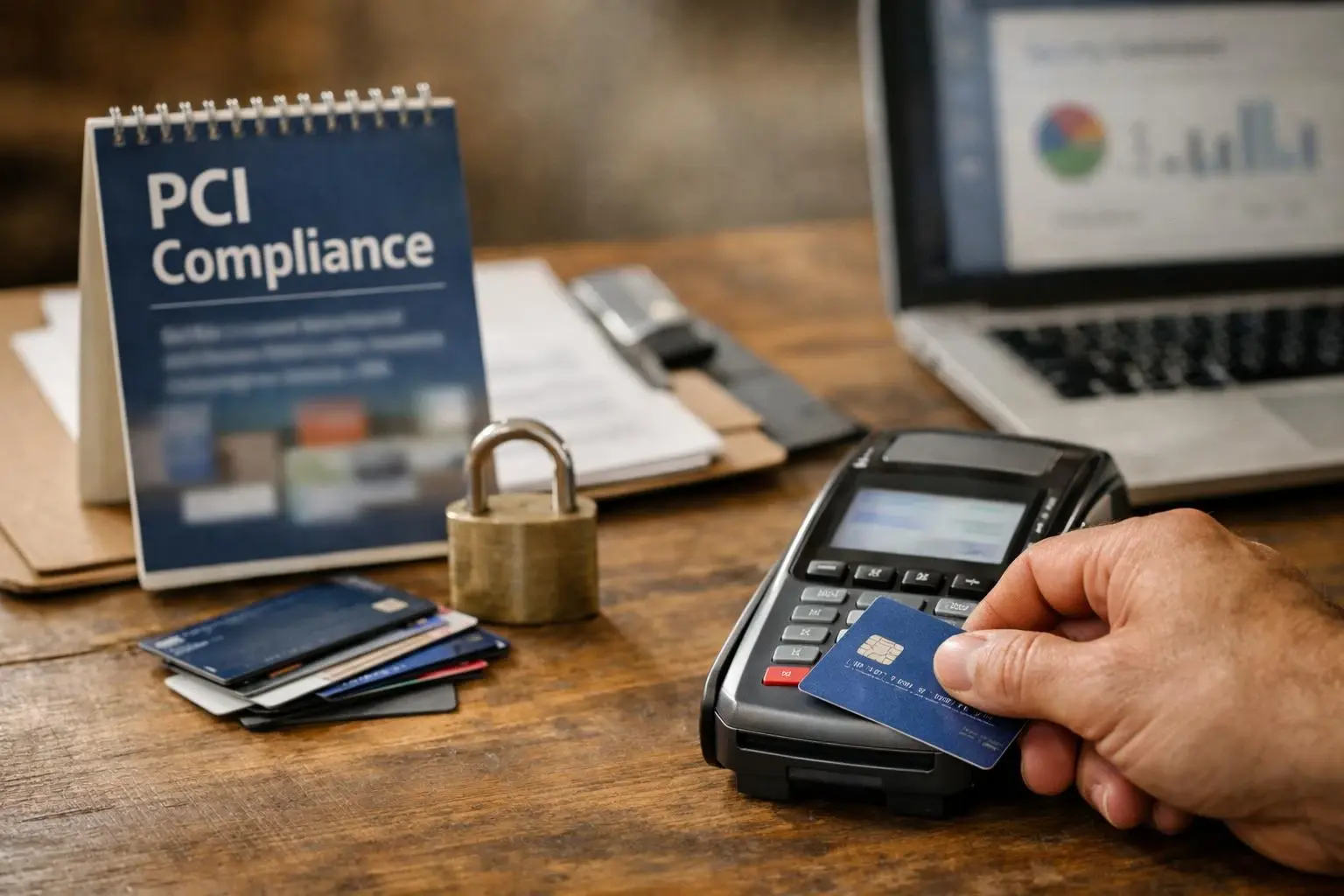
PCI Compliance protects sensitive cardholder data. It guards against theft, fraud. And misuse. Data breaches can cause big problems. These include financial losses and legal trouble. They can also damage a business’s reputation.
Compliance lowers the risk of costly breaches. It shows customers that security matters. This can be a big advantage in industries where trust is key. It also helps avoid fines from card networks. Fines can range from hundreds to thousands per month. In severe cases, businesses may lose card processing rights.
PCI Compliance helps meet contractual duties too. Most merchant agreements require following PCI DSS. Failing to comply can break the contract. It also aligns with other laws, like state data rules. Healthcare providers must follow HIPAA, for example. Compliance protects customers and the business itself.
When PCI Compliance Matters Most?
PCI Compliance is crucial during key business changes. These include setting up a merchant account or expanding payment options. It's also important after a security incident. Businesses must comply when adding new payment channels. Examples include online stores or mobile payments.
These channels increase exposure to card data. They need extra security measures. Compliance is also critical during mergers or processor changes. These events can disrupt security controls. Regular checks are needed when updating systems. Examples include new POS systems or cloud payments.
Businesses must stay alert during busy times. Holidays and sales events see more transactions. These periods can strain security and attract criminals. Compliance is also key after a security incident. Businesses must show they followed rules. This helps reduce legal and financial risks. It also restores trust with customers and partners.
- Launching an e-commerce website or mobile payment app.
- Upgrading POS systems or payment processing software.
- Expanding into new markets or adding recurring billing.
- Responding to a data breach or security incident.
- Undergoing an acquisition or change in payment processor.