Glossary

What is Recurring Billing?

Recurring Billing is a payment model in which a merchant automatically charges a customer’s credit or debit card on a fixed schedule for ongoing goods or services. This process relies on stored payment credentials and prior authorization, eliminating the need for manual re-entry each billing cycle while ensuring predictable revenue for businesses.

Sources reviewed: Payment Card Industry Data Security Standard (PCI DSS), Visa Core Rules and Visa Product and Service Rules

Quick Facts About Recurring Billing

Category

Payment processing model

Used for

Subscriptions, memberships, installment payments

Common confusion

Often mistaken for one-time billing with manual follow-ups

Also called

Automatic Billing, Subscription Billing

Often discussed with

Credit Card Payment Processing, Merchant Account Services

Key Takeaways About Recurring Billing

Understanding Recurring Billing

Recurring Billing in Credit Card Processing: Recurring Billing is a payment model in which a merchant automatically charge...

Recurring Billing is a payment arrangement that allows merchants to charge customers automatically at regular intervals, such as monthly, quarterly. Or annually. This model is widely used by businesses that provide ongoing services, digital subscriptions, membership programs. Or payment plans for high-value purchases. By storing a customer’s payment credentials securely, merchants can simplify the billing process, reduce administrative overhead. And cut down on the risk of missed payments.

Related glossary terms: Payment Processor, PCI Compliance, Chargeback.

At its core, Recurring Billing depends on two key elements: customer authorization and secure storage of payment details. Before initiating the first charge, merchants must obtain explicit consent from the customer, often through a signed agreement or digital acceptance of terms. Payment information is then encrypted and stored in compliance with Payment Card Industry Data Security Standard (PCI DSS) requirements. That way that sensitive data, such as credit card numbers, is protected from unauthorized access or breaches.

How Recurring Billing Works?

The Recurring Billing process typically follows a predictable workflow. First, a customer signs up for a service or product and provides payment details, which are securely stored by the merchant or a third-party payment processor. The merchant sets the billing frequency (e.g., monthly) and the amount to be charged. When the scheduled billing date arrives, the payment system automatically initiates a transaction using the stored credentials. If the transaction is approved, funds are transferred from the customer’s account to the merchant’s account. And a receipt is generated and sent to the customer.

Most Recurring Billing systems include features to handle common scenarios, such as failed payments or expired cards. For example, if a transaction is declined due to insufficient funds, the system may retry the charge after a set period or notify the customer to update their payment method. Similarly, if a customer’s credit card expires, the system can prompt the customer to provide new details before the next billing cycle. These automated processes help maintain continuity of service and reduce churn for businesses.

Why Recurring Billing Matters?
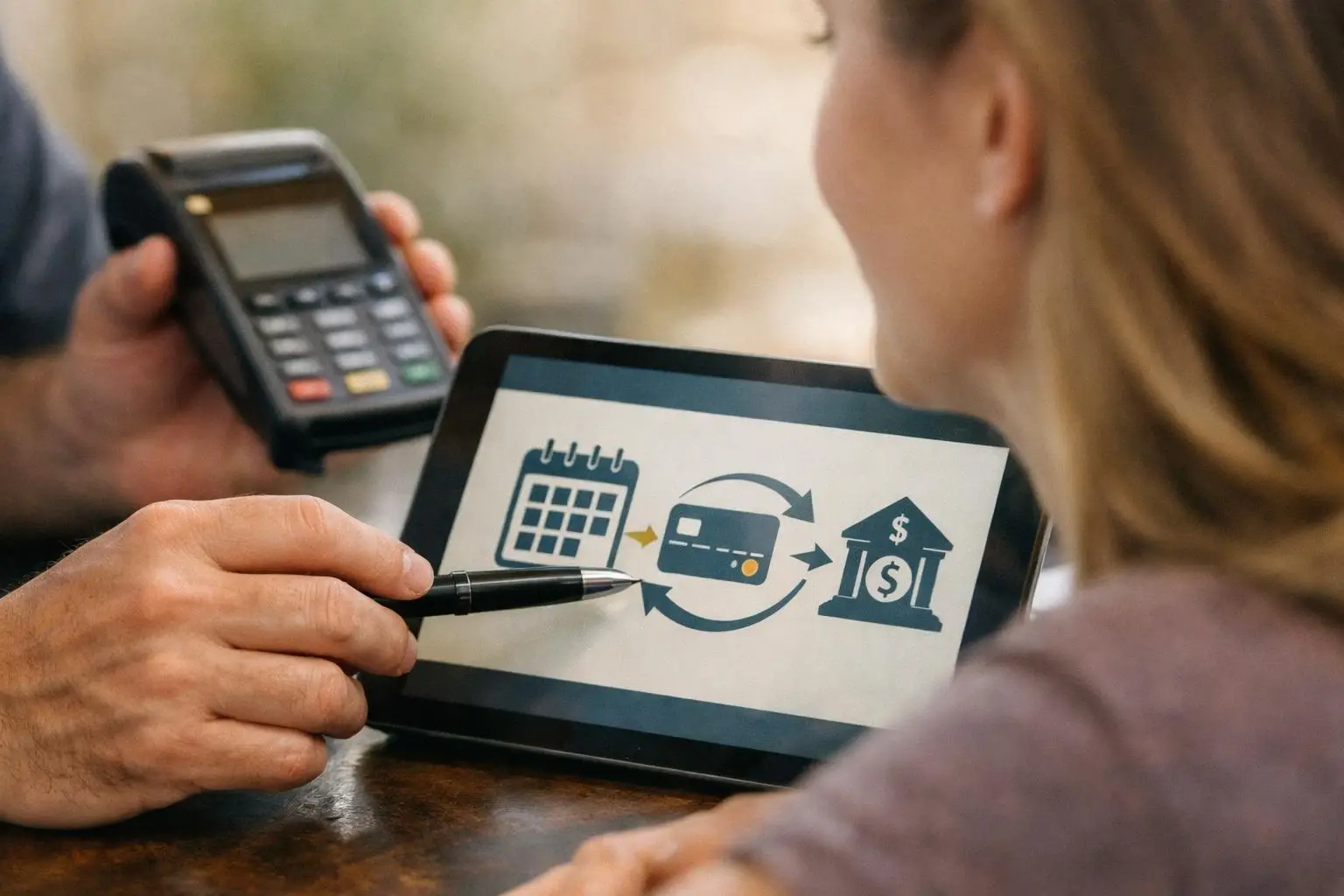
How Recurring Billing applies to Credit Card Processing services in Austin, United States—practical illustration

Recurring Billing offers significant advantages for both merchants and customers. For businesses, it provides a steady and predictable revenue stream, which is especially valuable for subscription-based models. By automating the billing process, merchants can reduce administrative costs, improve cash flow. And focus resources on growth and customer service rather than manual payment collection. For customers, Recurring Billing eliminates the hassle of remembering to make payments, ensuring uninterrupted access to services or products they rely on.

Beyond convenience, Recurring Billing also supports better financial planning for businesses. With consistent revenue cycles, merchants can forecast cash flow more accurately, invest in scaling operations. And offer flexible payment options to attract and retain customers. And the automated nature of Recurring Billing reduces human error, such as missed payments or incorrect charges, which can lead to customer dissatisfaction or disputes.

When Recurring Billing Matters Most?

Recurring Billing is particularly valuable in industries where ongoing customer relationships are critical. Subscription-based businesses, such as streaming services, software-as-a-service (SaaS) providers. And membership organizations, rely on Recurring Billing to maintain steady revenue and customer engagement. Similarly, service-based businesses, such as gyms, childcare centers. And professional associations, use Recurring Billing to simplify payment collection and reduce late or missed payments.

Recurring Billing also plays a key role in installment payment plans, where customers pay for high-value purchases over time. For example, healthcare providers, educational institutions. And retailers may offer Recurring Billing options to make large expenses more manageable for customers. In these cases, the ability to automate payments ensures that both parties adhere to the agreed-upon payment schedule, reducing the risk of defaults or collection issues.

For merchants in Austin, TX, Recurring Billing can be especially useful for businesses with a strong local customer base, such as fitness studios, co-working spaces. Or professional services. By offering flexible payment options, these businesses can improve customer retention and compete more effectively in a dynamic market.


How to Evaluate Recurring Billing?

Related Concepts Compared

Recurring Billing vs. One-Time Billing

One-Time Billing requires manual payment for each transaction. While Recurring Billing automates charges on a set schedule using stored payment details.

Recurring Billing vs. Installment Payments

Installment Payments divide a single purchase into equal payments over time, whereas Recurring Billing typically applies to ongoing services or subscriptions with no predefined end date.

Expert Note

Recurring Billing systems must balance automation with transparency. Customers should always have the ability to update payment methods, pause subscriptions. Or cancel service easily to maintain trust and compliance with card network rules.

Common Mistakes or Myths About Recurring Billing

  • Storing payment details without PCI DSS compliance, exposing the business to security risks and fines.
  • Failing to notify customers before charges, leading to disputes and chargebacks.
  • Not offering easy ways for customers to update payment methods, increasing churn.
  • Assuming Recurring Billing is only for subscriptions, overlooking its use for installment plans or memberships.

Recurring Billing in Practice: A Real-World Example

A fitness studio in Austin offers monthly memberships with Recurring Billing. Customers provide their credit card details during sign-up. And the studio’s payment system automatically charges the membership fee on the first of each month. If a customer’s card expires, the system sends an email prompting them to update their payment information, ensuring uninterrupted access to the studio.

Related Services

Related Terms

Payment Processor

Payment Processor is a financial technology company or service that handles electronic payment transactions between merchants, customers. And banks. Payment Processors authorize, transmit. And settle credit card, debit card. And other digital payments, ensuring funds move securely from the buyer’s account to the seller’s account without direct involvement from either party.

PCI Compliance

PCI Compliance is a set of security standards established by the Payment Card Industry Security Standards Council (PCI SSC) to protect cardholder data during credit and debit card transactions. PCI Compliance requires businesses that handle payment card information to implement specific security measures, undergo regular assessments.

Chargeback

Chargeback is chargebacks are forced refunds initiated by a cardholder’s bank when the cardholder disputes a transaction, claiming it was unauthorized, fraudulent. Or not as described. Chargebacks reverse the payment flow, withdrawing funds from the merchant’s account and returning them to the cardholder, often accompanied by fees and potential penalties for the merchant.

Tokenization

Tokenization is a data security process that replaces sensitive cardholder information, such as a primary account number (PAN), with a unique, non-sensitive identifier called a token. This token retains no exploitable value if intercepted, reducing the risk of data breaches while enabling secure payment transactions across systems, networks. And storage environments.

Card Not Present

Card Not Present is a transaction type in which the physical payment card is not presented to the merchant at the point of sale. These transactions occur primarily in online, phone, mail-order. Or recurring billing environments where the cardholder provides card details verbally, digitally. Or in writing rather than swiping, inserting. Or tapping the card. Card Not Present transactions carry higher risk and typically incur elevated processing fees and chargeback liability compared to in-person transactions.

CreditCardProcessing-Austin.com

Have Questions About Recurring Billing?

Contact CreditCardProcessing-Austin.com for practical guidance on Recurring Billing and related credit card processing work in Austin.

Contact Us