Understanding Interchange Fee

Interchange Fee is a fundamental component of credit and debit card transactions, representing the cost merchants pay to the bank that'ssued the customer’s card. Unlike other fees in the payment processing chain, interchange fees are non-negotiable and standardized across the industry by card networks such as Visa, Mastercard, find. And American Express. These fees exist to cover the costs associated with processing transactions, including authorization, clearing, settlement, fraud prevention. And the risk of funding the transaction before the merchant receives payment. Because interchange fees are set by the networks, they apply uniformly to all merchants, regardless of their payment processor or location.
Related glossary terms: Discount Rate, Merchant Category Code, Transaction Fee.
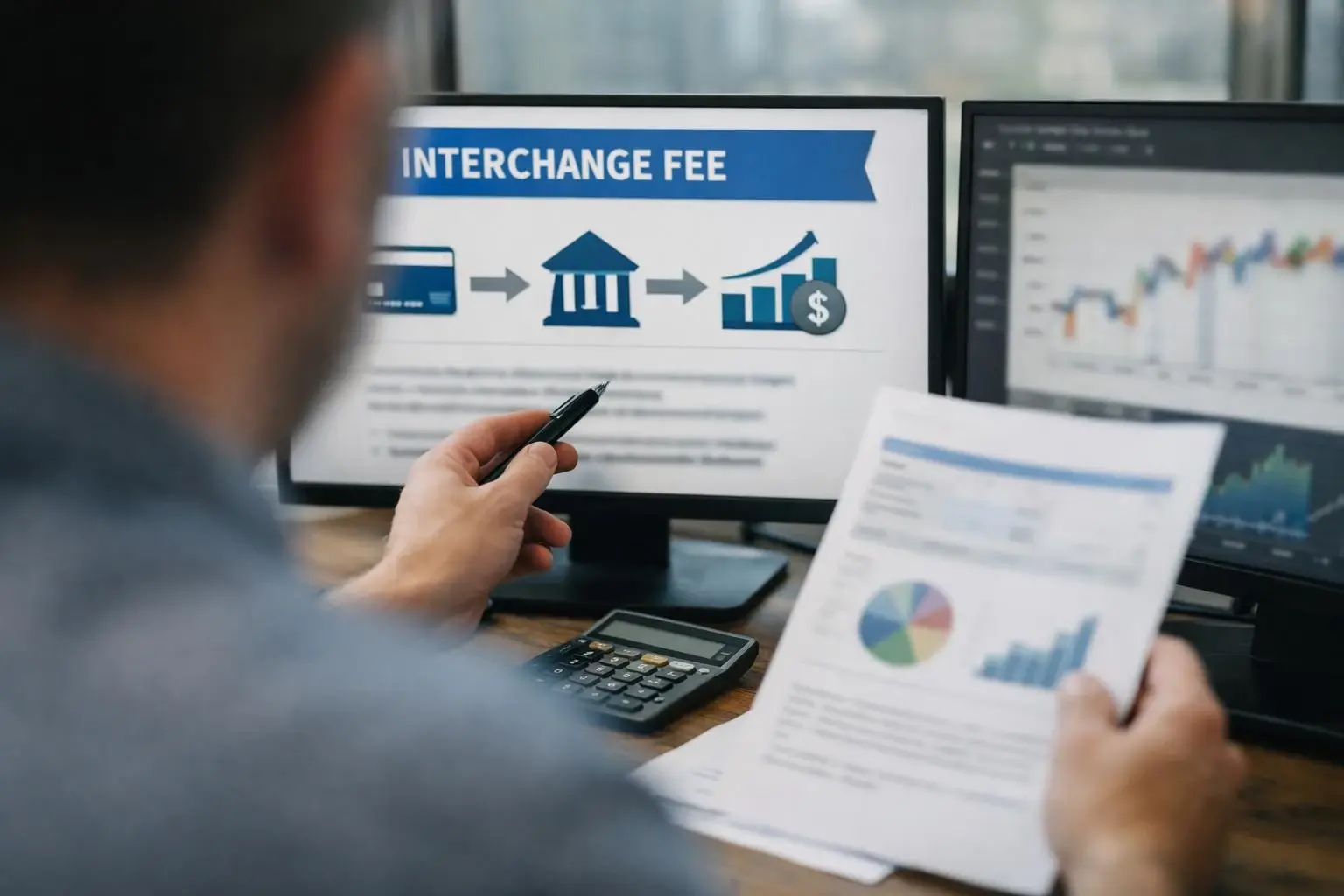
The structure of interchange fees is complex, as they vary depending on several factors. For example, a transaction made with a rewards credit card typically carries a higher interchange fee than one made with a standard debit card. Similarly, transactions conducted in person (card-present) usually incur lower fees than those conducted online or over the phone (card-not-present), due to the reduced risk of fraud. The fee is typically calculated as a percentage of the transaction amount plus a small fixed fee per transaction, such as 1.5% + Interchange fees are determined through a tiered pricing model established by the card networks. Each network publishes an interchange fee schedule that categorizes transactions based on criteria such as card type (credit, debit, rewards, corporate), transaction method (swiped, dipped, keyed, online). And merchant category code (MCC). For instance, a grocery store (MCC 5411) may pay a lower interchange fee than a restaurant (MCC 5812) due to the perceived lower risk of fraud and chargebacks in grocery transactions. The fee is automatically deducted from the transaction amount before the remaining funds are deposited into the merchant’s account. For local customers, The flow of funds in a card transaction helps illustrate how interchange fees function. When a customer makes a purchase, the merchant’s payment processor submits the transaction to the card network, which then routes it to the issuing bank for approval. Once approved, the issuing bank releases the funds to the card network, minus the interchange fee. The card network then forwards the remaining amount to the merchant’s acquiring bank, which deposits it into the merchant’s account, minus any additional fees charged by the processor. This entire process occurs within seconds. But the interchange fee is a critical part of ensuring the system remains balanced and sustainable for all parties involved. Interchange fees play a crucial role in the economics of payment processing, directly impacting merchants’ bottom lines. For businesses that process a high volume of card transactions, even small differences in interchange rates can result in significant annual costs. For example, a merchant processing Beyond individual merchants, interchange fees also shape the broader payments ecosystem. They enable issuing banks to offer credit and debit cards with minimal or no annual fees to consumers, while also funding fraud detection and prevention measures that protect both merchants and cardholders. Without interchange fees, the costs of maintaining this infrastructure would likely be passed on to consumers in other ways, such as higher annual fees or reduced rewards. For merchants, awareness of interchange fees is essential for negotiating competitive rates with payment processors, as processors often bundle interchange fees with their own markup fees into a single rate. This bundling can obscure the true cost of interchange, making it difficult for merchants to compare pricing models. Interchange fees become particularly important in scenarios where merchants process large transaction volumes or operate in industries with high average ticket sizes. For example, a high-end retail store or a business-to-business (B2B) supplier may face significantly higher interchange costs due to the use of corporate or premium rewards cards, which carry higher fees. Similarly, e-commerce businesses often encounter elevated interchange fees because card-not-present transactions are inherently riskier and thus more costly to process. Merchants in these situations must carefully evaluate their payment processing agreements to ensure they're not overpaying for interchange costs that could be mitigated through alternative pricing models, such as interchange-plus or tiered pricing. Interchange fees also matter when merchants are considering whether to pass these costs on to customers, a practice known as surcharging. While surcharging is legal in many U.S. States, it's subject to strict regulations, including disclosure requirements and limits on the amount that can be charged. Merchants must also navigate the policies of card networks, which may prohibit surcharging for certain card types, such as debit cards. In Austin, TX, where businesses often cater to a diverse customer base, understanding these nuances can help merchants avoid compliance risks while managing their processing costs effectively. And merchants who accept international cards may encounter higher interchange fees due to cross-border transaction costs, making it essential to factor these fees into pricing strategies.How Interchange Fee Works?
Why Interchange Fee Matters?
When Interchange Fee Matters Most?